 ChoreDo
How to teach kids to wash the dishes
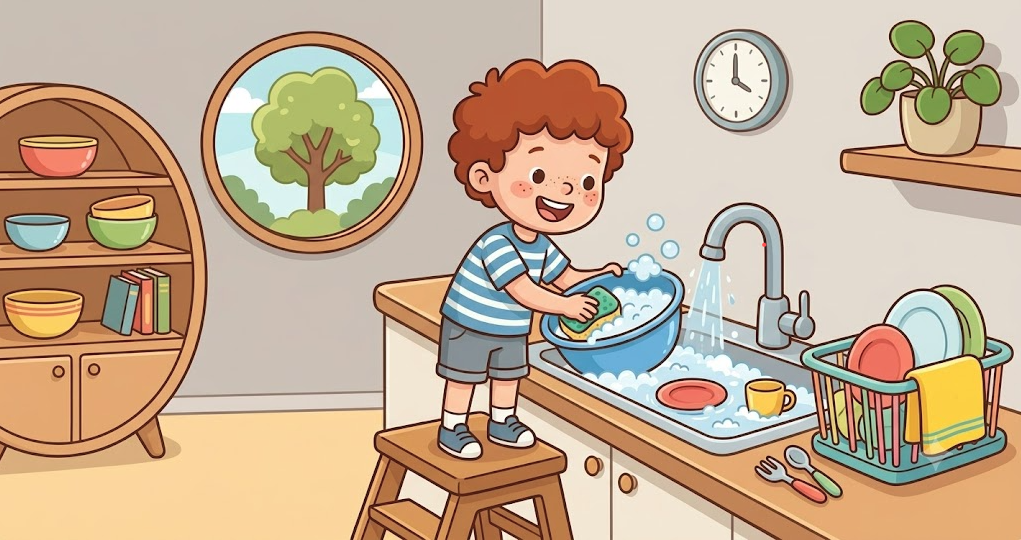
Washing up is a brilliant chore because it's useful every single day and teaches care, order and a little patience. Start with safe, unbreakable items and build up.
Why dishwashing is worth teaching
- ✓It's a genuinely useful skill they'll need for life.
- ✓It teaches a process: scrape, wash, rinse, dry, put away.
- ✓Warm water and bubbles make it one of the more enjoyable chores.
- ✓Helping after meals builds a sense of contributing to the family.
Step by step
- 1
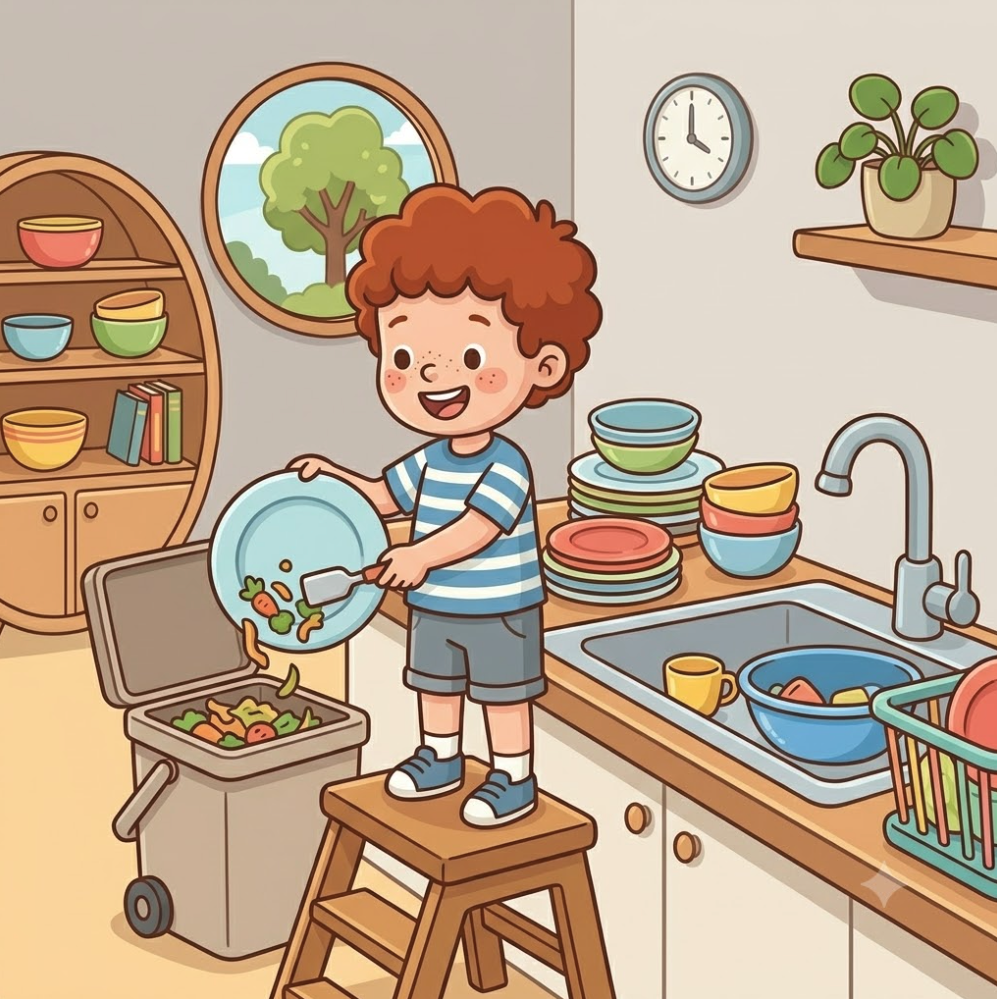
Scrape and stack
Scrape leftovers into the bin or compost and stack dishes by the sink.
- 2
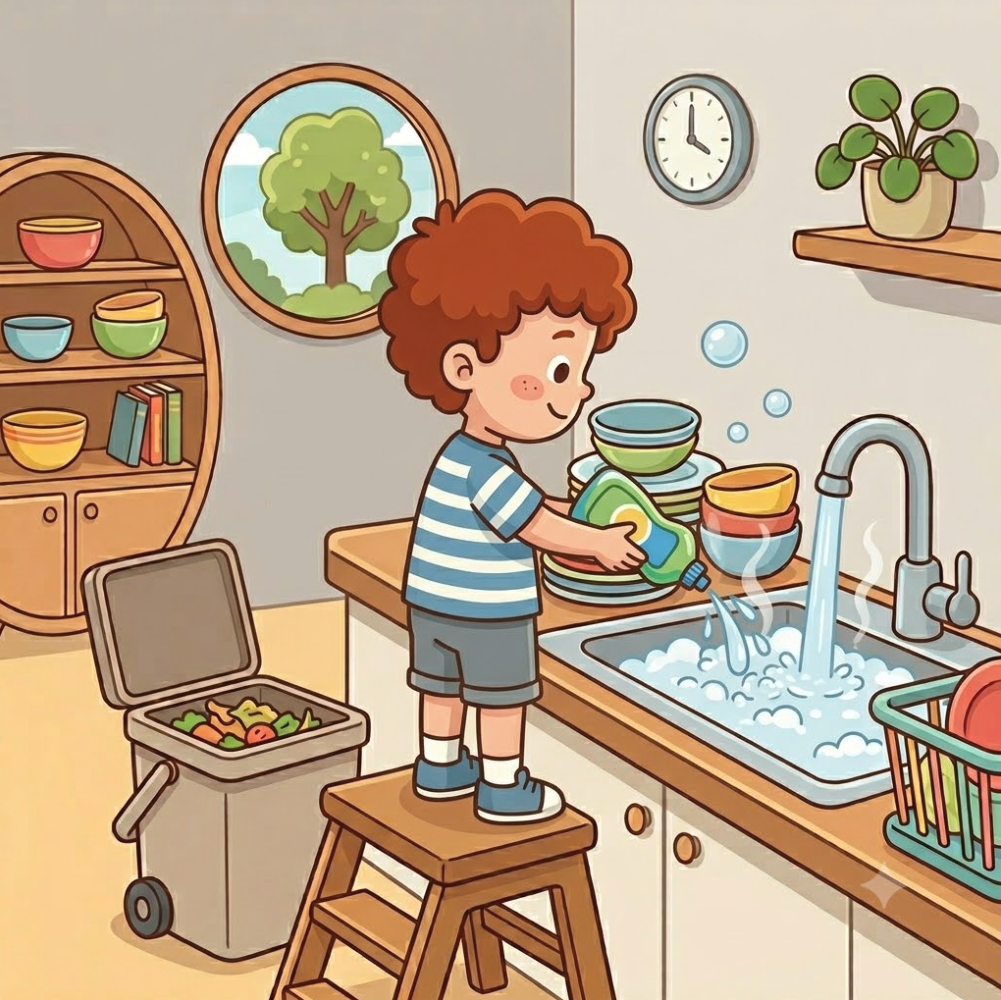
Fill with warm soapy water
Run warm (not hot) water with a squirt of dish soap.
- 3
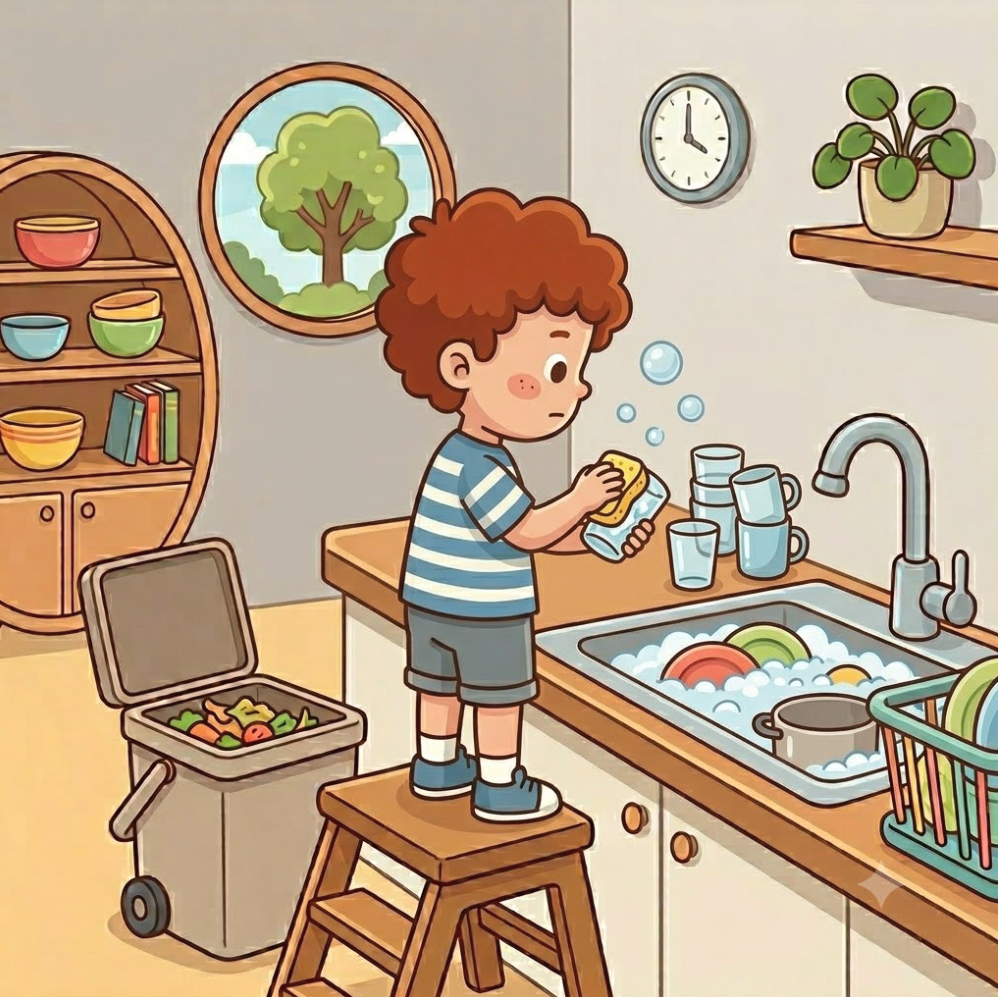
Wash cleanest first
Start with glasses and cups, then plates and bowls, and pots last.
- 4
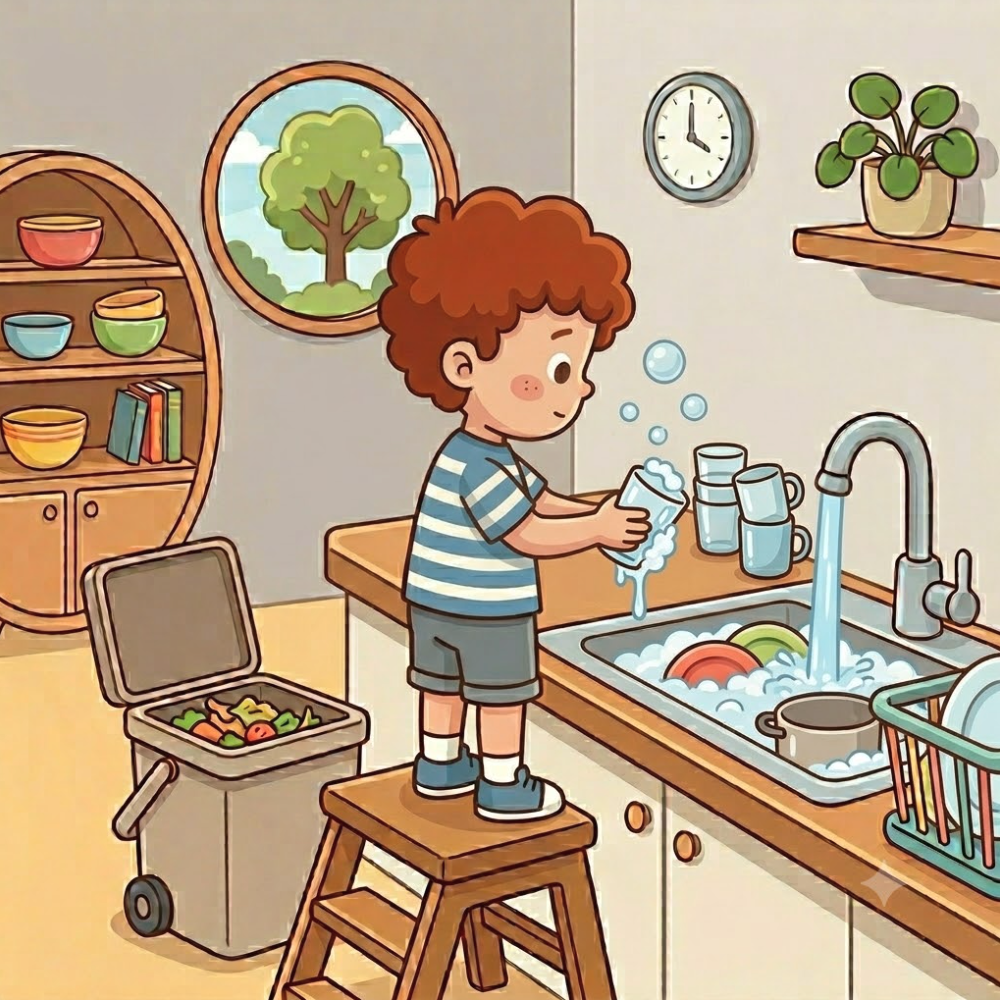
Rinse
Rinse off the suds under clean running water.
- 5
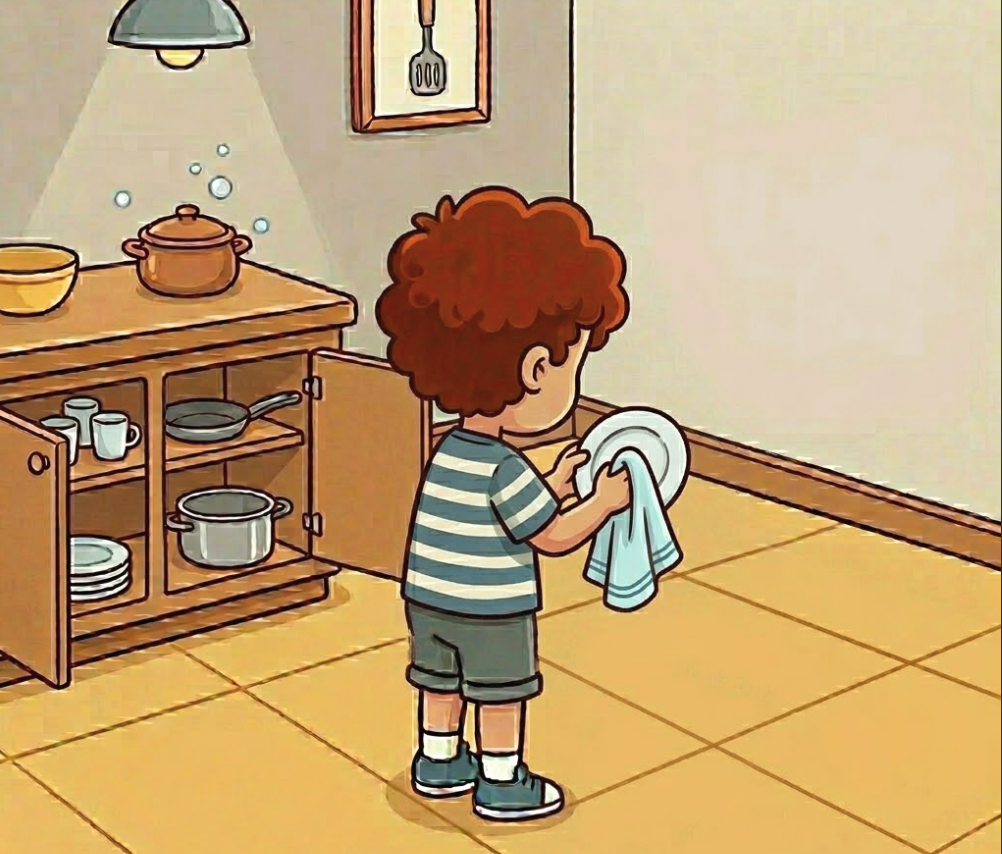
Dry and put away
Air-dry on the rack or towel-dry, then put everything back in its place.
What to expect at each age
Tips to make it stick
- 💡Use warm, never hot, water and keep sharp knives for an adult until they're ready.
- 💡A sturdy step stool makes the sink the right height and prevents wobbles.
- 💡Wash cleanest to dirtiest so the water stays usable longer.
- 💡Pair it with clearing the table so the after-dinner routine flows.
FAQ
Is it safe for kids to wash dishes?
Yes, with the right setup: warm not hot water, supervision for young children, and no sharp knives until they're older.
What age can kids start?
Around 3–4 with plastic items and help; most 8–10 year olds can do a full wash-up.
Dishwasher instead?
Loading and unloading the dishwasher is a great alternative chore with the same routine-building benefits.
Make "Do the dishes" a quest in ChoreDo
Turn this chore into a game — kids earn gold, level up and unlock rewards you choose. Free to use.
Get started